I love this country. I want that on the record before I start, because what follows is going to sound like I don’t, and the people who’ll say I don’t are precisely the people this is about. I love the pubs and the coastline and the fact that we invented most of the things worth inventing and then apologised for them. I love that we queue. I love that we produced Whittle and Brunel and Turing and the Mini and Concorde and the Sex Pistols, in some cases from the same postcode. I love that a nation this size, this wet, this fond of a moan, has somehow managed to produce more than its share of people who looked at the world as it was and thought, no, I’ll have a go at that.
And I love, in a bleak sort of way, what we do to them afterwards.
Because there’s a thing we do, and we do it better than anyone on Earth, and it isn’t football (we’re rubbish at football, we just talk about it as if we weren’t). The thing we do is this. We find someone. We decide they’re marvellous. We put them on the telly, on the front pages, on a stamp if they hang around long enough. We give them a knighthood. We call them a national treasure, which is the kiss of death, the phrase you hear just before the trapdoor opens. And then, almost immediately, and I do mean almost immediately, sometimes in the same news cycle, we turn on them. Not for anything new. Not because they’ve done something they hadn’t done before. Simply because they’re still there, still successful, still not apologising for it, and that, in Britain, is the one thing you cannot be forgiven.
Let me give you three. I could give you thirty, but I’ve picked these three because between them they’ve made more people happy, employed more people, and paid more tax than the entire Cabinet, the Shadow Cabinet and every columnist who has ever sneered at them put together, and yet you can’t mention any of the three at a dinner party without somebody pulling a face.
Start with the vacuum cleaner bloke. James Dyson built five thousand one hundred and twenty-seven prototypes of a thing in a shed in Bath before he had one that worked. Five thousand. I’ve given up on jigsaws at forty pieces. He took it to Hoover, who told him to go away, and to every other appliance maker in the country, who told him the same, because a bag is a bag and the bag business was lovely, thank you, and who was this bloke with the beard and the cyclone. So he made it himself. It was purple and grey and looked like something off a fire engine, it cost twice what a Hoover cost, and within about eighteen months it was the best-selling vacuum cleaner in the country, which is the sort of thing that only happens when a product is so obviously better that even the British will pay for it. He then did the same with hand dryers, with fans that had no blades, with hairdryers that cost as much as a decent weekend in Lyon and which The Girlfriend informs me are worth every penny, and with a university in Wiltshire where the students get paid to do an engineering degree instead of paying for one. Malmesbury, a market town in the middle of nowhere in particular, now has a campus full of engineers working on batteries and robots. The company turns over six billion pounds a year. He’s employed thousands of people in this country for thirty years, and by the Sunday Times’s own count he’s been, in at least one year, one of the biggest individual taxpayers in the entire kingdom, north of a hundred million in a single go, which is more than most of the people writing about him will pay in a hundred lifetimes.
So what do we say about James Dyson? We say he makes them in Malaysia. We say he’s a Brexiteer who then buggered off to Singapore, ho ho, what a hypocrite. We say he’s a Tory donor, as though that were an offence. We say he’s rich, in the tone of voice usually reserved for “he’s been arrested”. And we say it with such satisfaction, such a lovely warm glow of righteousness, that you’d think he’d been caught doing something in a lay-by.
Let’s take those one at a time, because that’s what grown-ups do. Yes, he makes them in Malaysia. He moved the assembly lines there in 2002, because it was about a third cheaper, and he put the money he saved into the research campus in Wiltshire, where the actual clever bit happens. Now, I’ve run businesses. Not on his scale, but I’ve signed the cheques and I’ve sat across the table from HMRC and I’ve had the conversation about what happens to the payroll if the numbers don’t work. And I’ll tell you what any honest person who has ever had to make a payroll will tell you: if you can save thirty per cent on the boring bit and spend it on the clever bit, you do it, and you do it before your competitors do it, and if you don’t then in five years there is no company, no Malmesbury, no engineers, no university, and the people calling you a traitor for moving production will be exactly the same people calling you a failure for going bust. Yes, the head office went to Singapore, because that’s where the customers are now, and because, in his words, Europe’s bureaucracy had got on his wick. Fine. I’d have preferred he stayed. But the research is still here, the jobs are still here, the tax is still here, and the man is still, at his age, in a lab. Was he wrong on Brexit? Maybe. So were about half of you, one way or the other, and none of you built anything.
Then there’s the balloonist.
Richard Branson started with a student magazine and a mail-order record business run out of a phone box, and then a record label that signed Mike Oldfield when nobody else would, and then the Sex Pistols when nobody else dared. Then, in 1984, having never run an airline and being told by absolutely everyone that this was insane, he leased one second-hand jumbo and started flying it to New York against British Airways, who at the time were roughly as friendly to new entrants as the Kremlin. BA tried to kill Virgin Atlantic in the courts and in the press and in some fairly grubby ways that came out later, and lost, and apologised, and paid. Since then the man has had a go at trains, mobile phones, banking, gyms, cola (rubbish, that one, but he had a go), spaceships and, memorably, crossing the Atlantic in a balloon that ended up in the sea. Virgin companies employ tens of thousands of people. He was knighted, and for about ten minutes the country thought he was a bit of a lad, a Brit with a grin taking on the big boys, and we loved him.
And then. Well. Now he’s a tax exile who lives on his own island. Now he’s the man who sued the NHS. Now he’s the man who, when the pandemic grounded every aircraft on Earth, had the brass neck to ask the government for a loan, and the entire country, or at least the bit of it that’s on Twitter, decided in unison that he should sell the island and pay for it himself, and there was a sort of national orgasm of contempt that lasted about a fortnight.
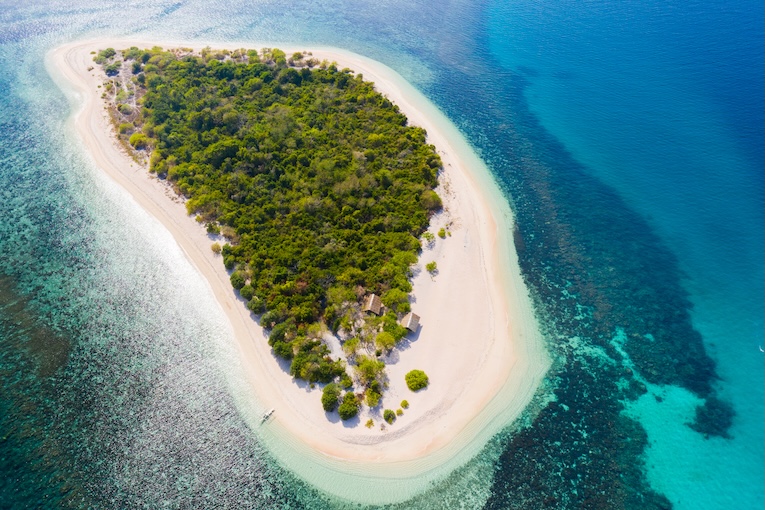
Right. The island. He’s lived on Necker since 2006. He has said, and I have no reason to disbelieve him, that he moved there because he liked it, which is, I put it to you, a reason that most of us would move to a Caribbean island if we could. Does he pay UK income tax? By most accounts, not personally, not for years. Would I prefer he did? Yes. Do I think that erases forty years of building companies here, employing people here, and paying corporation tax, VAT, National Insurance and every other tax that a business pays whether or not its founder happens to be sitting in a hammock in the BVI? No. The NHS lawsuit: Virgin Care lost a contract, thought the process was bent, said so in court, and settled. That’s how contracts work. I’ve done it. Every supplier to the NHS has done it or thought about it. It’s not a war crime, it’s procurement. And the bailout: he asked for a loan, not a gift, offered the island as collateral, was told no, and went and raised the money privately instead, which is precisely what he should have done and precisely what he did. Virgin Atlantic is still flying. The people who work for it still have jobs. Which was, if you remember, the point.
And then the piano player, who is the most interesting of the three, because with him the turn was so fast and so vicious that it ended up in the High Court.
Reg Dwight from Pinner sold something like three hundred million records. He wrote, with Bernie Taupin, a catalogue that the whole country knows by heart whether it admits it or not. He was, for a while, the biggest thing in the world, and Britain was very pleased with him, because he was ours, and he was odd, and he was clearly having a wonderful time in those glasses. Then, in the late eighties, The Sun decided he’d had enough of a good run and ran a series of stories about him that were, not to put too fine a point on it, invented. Completely made up. He sued. They paid a million pounds, which in 1988 was a great deal of money, and printed “SORRY ELTON” across the front page in letters the size of a bus. And here’s the bit that should make you think: they’d have done it anyway, because the sums added up. Knock him down, sell some papers, pay the fine, move on. He was a business decision.
Since then he’s founded a charity that has raised more than half a billion dollars to fight AIDS across ninety countries, one of the biggest funders of that fight on Earth, at a time when most of the British establishment wouldn’t say the word out loud. He’s been knighted. He’s played to more people than any human being alive. He’s a national treasure, we say, with a smile, and then in the same breath we call him a diva, a tantrum in a wig, a man who once spent three hundred grand on flowers (he did; when they asked him about it in court he said “I like flowers”, which is the single best answer ever given under oath in this country and I’ll fight anyone who says otherwise). We forgive him a bit now, because he’s old and sober and married and did Glastonbury, but it took forty years and it was never really forgiveness. It was just that we’d found somebody newer to do it to.
Look at what those three have in common, because the differences are obvious and the similarities are the point. None of them inherited anything. All three were told no, repeatedly, by people who were paid to know better. All three took an absurd risk with their own money and their own name. All three employed enormous numbers of people who would otherwise have been employed by nobody. All three paid, one way or another, a great deal of tax. All three have made this country richer, more famous and more interesting than it would have been without them. And all three are now, in the great British conversation, a punchline.
Now compare the treatment. Nobody says the same things about the head of a quango. Nobody sneers at a permanent secretary for having a good pension. Nobody asks the Chair of a Select Committee what he’s ever built. We reserve our contempt, with unerring precision, for the people who have actually made something, and we exempt from it entirely the people who merely administer things, comment on things and regulate things. The columnist who calls Dyson a hypocrite has never had to make a payroll. The MP who calls Branson a tax dodger has never had to meet one. The comedian who does the Elton wig gag has never raised a penny for anybody. And the thing is, they know it, and that’s exactly why they do it.
The Americans don’t do this, and you’ll say that’s because the Americans are vulgar, and you’ll be right, but they’re also rich, and those two facts are not unconnected. An American looks at a man with a private island and thinks, how do I get one. A Brit looks at the same man and thinks, how do we get it off him. One of those attitudes builds aeroplanes. The other builds a Select Committee to enquire into aeroplanes.
I’m not saying any of them is a saint. The whole point is that none of them is a saint, that nobody is, that the saints, as a rule, don’t build anything, and that if you wait for a perfect entrepreneur before you’ll let yourself admire one you’ll be waiting a very long time in a country with no entrepreneurs in it. Dyson should have kept the head office here. Branson should probably pay a bit more tax and fly a bit less about it. Elton should have lost the flowers habit a decade sooner. Fine. Deduct the points. And then look at what’s left, which is three men who between them have done more for this country than any Prime Minister since the one they all disagree about, and try, just try, to say “well done” without adding “but”.
You can’t, can you? There’s always a but. Even now, reading this, you’ve got one ready. He makes them in Malaysia, but. The island, but. The flowers, but.
That but is the most expensive word in the English language. It has cost us more companies, more inventions and more talent than any tax rate ever levied, because the bright ones can hear it coming, and increasingly they go and build the thing somewhere that says “well done” and means it.
And then we say they’ve buggered off, and pull a face, and feel much better.